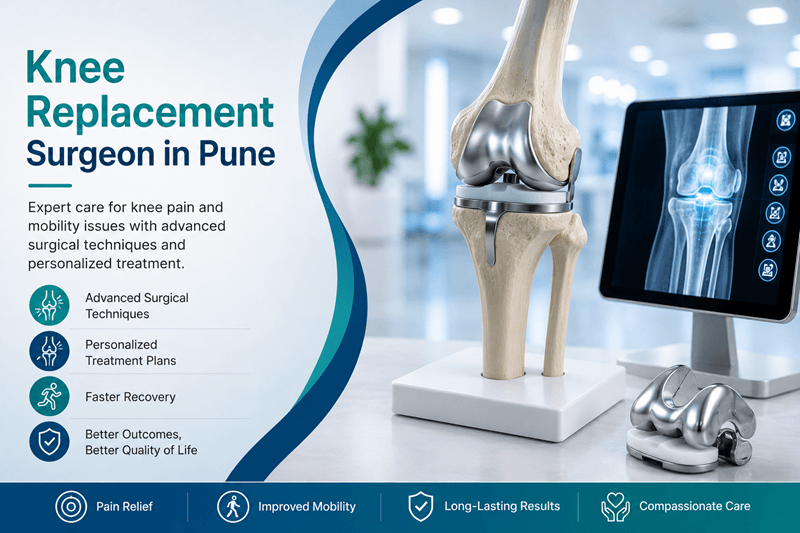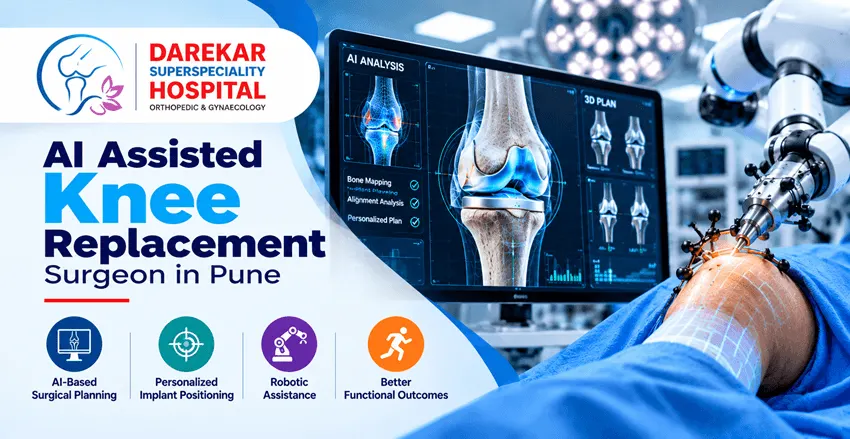
AI Assisted Knee Replacement Surgeon in Pune
Knee pain can gradually make everyday activities such as walking, climbing stairs, standing for long periods, and getting up from a chair difficult. When knee arthritis becomes severe, the discomfort may affect mobility, independence, and quality of life. If medicines, physiotherapy, lifestyle changes, and other non-surgical treatments no longer provide enough relief, knee replacement surgery may be considered.
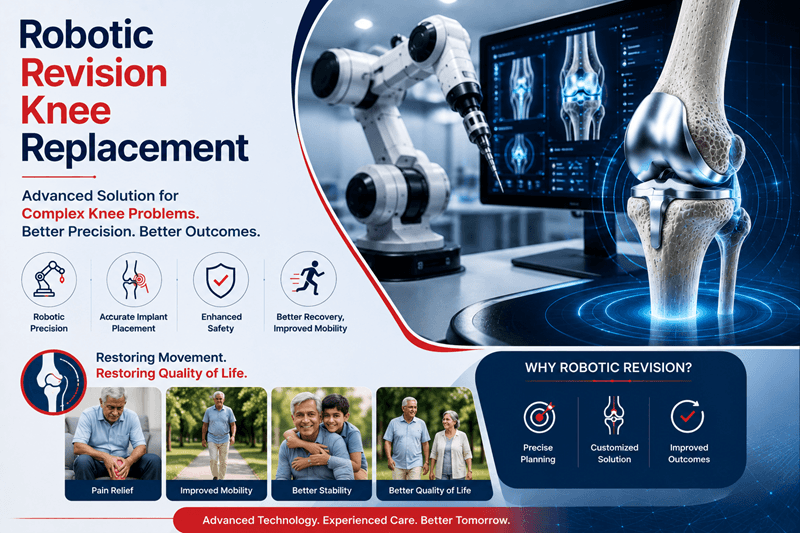
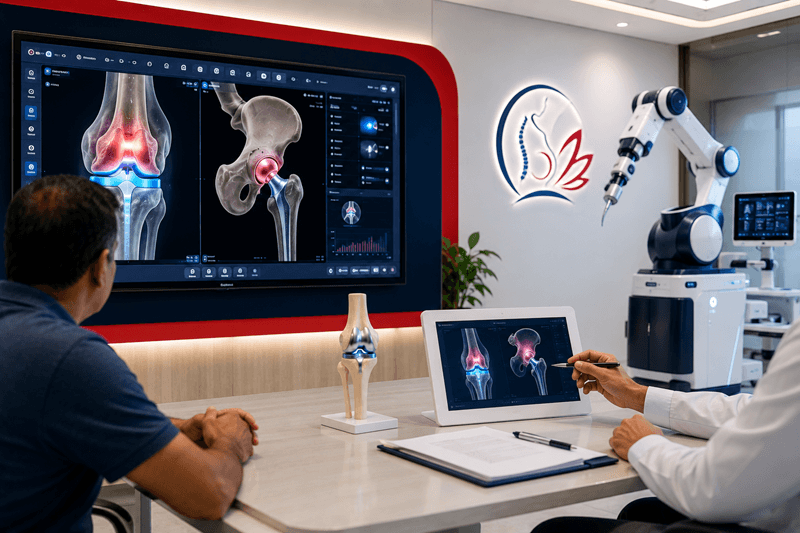
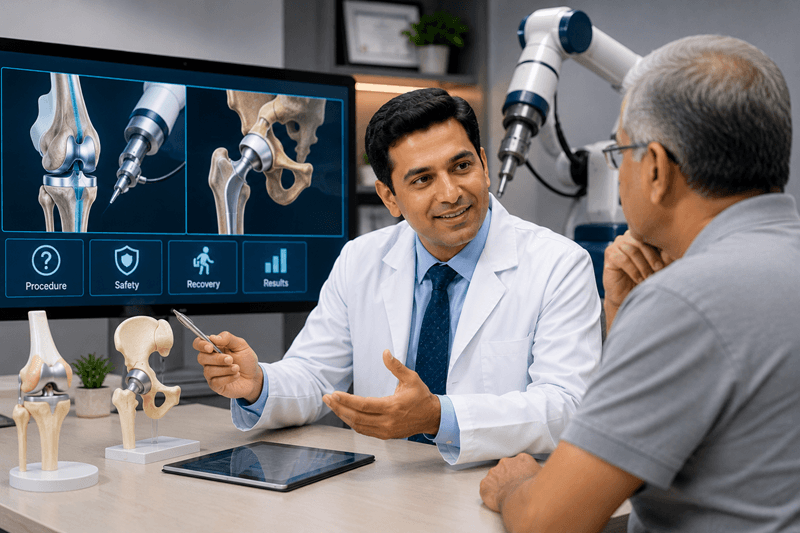
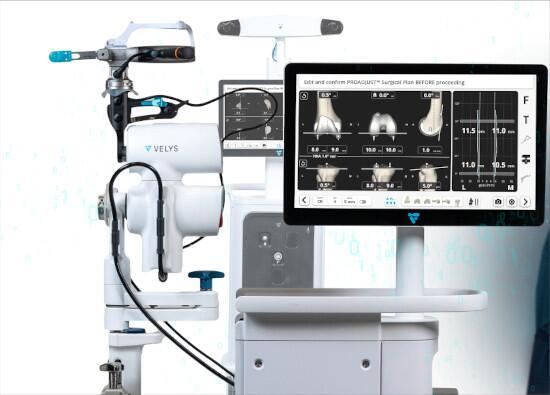
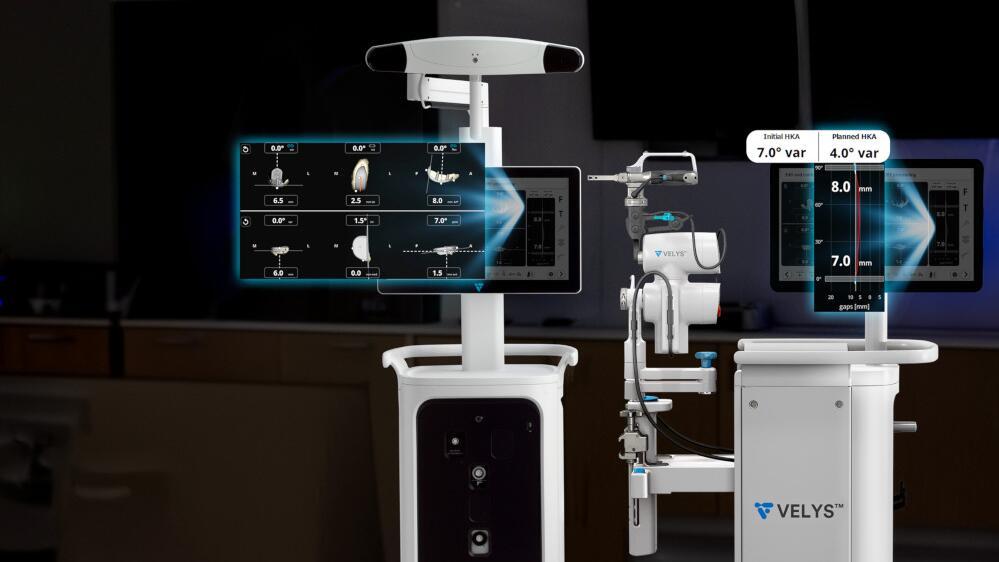
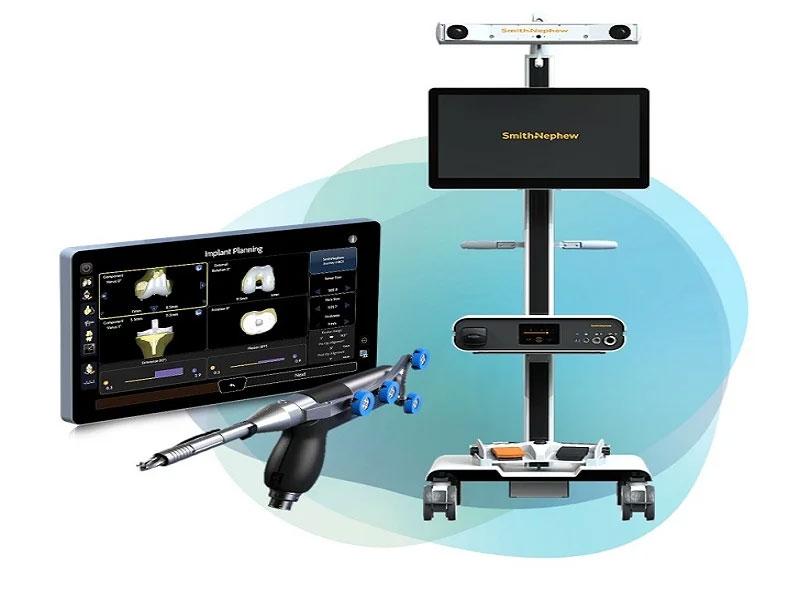
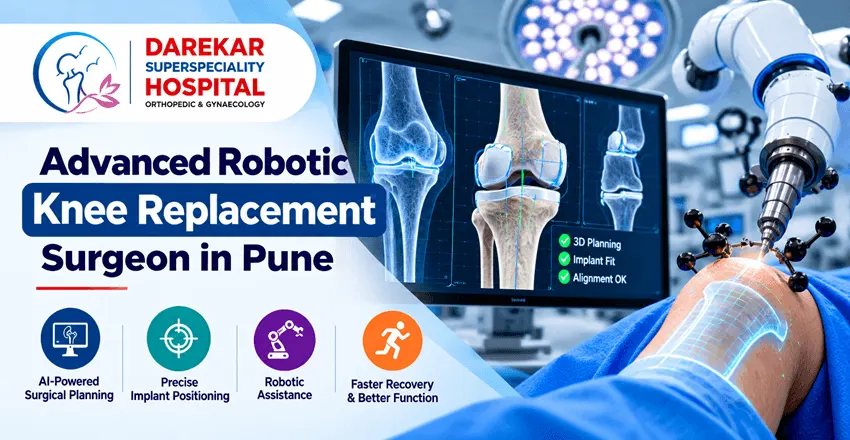
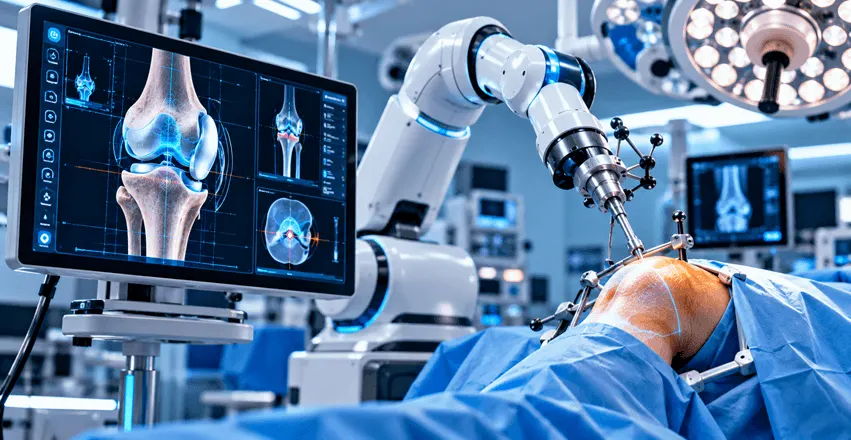
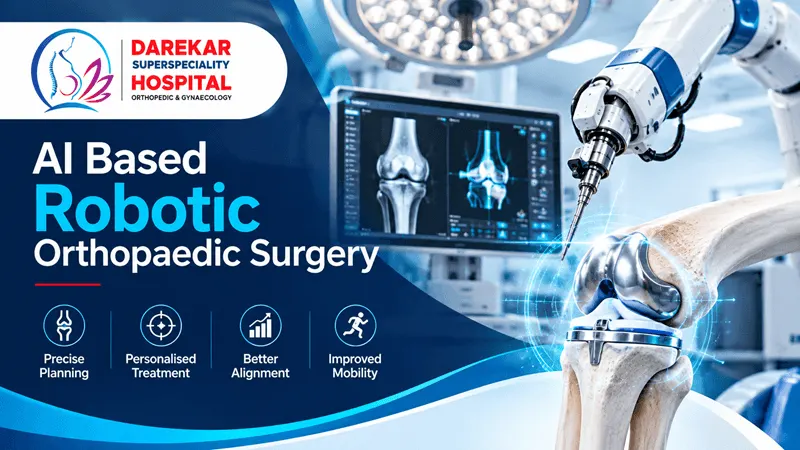
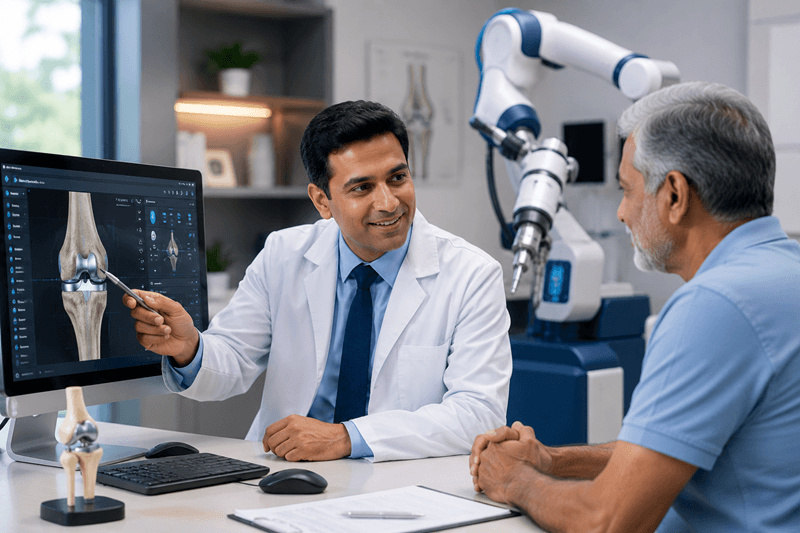
Advances in orthopaedic care have introduced digital planning tools, computer-assisted navigation, and robotic-assisted technologies that may help surgeons plan and perform selected steps of knee replacement surgery. These technologies can provide additional anatomical information, measurements, or guidance during the procedure, depending on the system being used.
If you are looking for an AI-assisted knee replacement surgeon in Pune, it is useful to understand what AI-assisted technology means, how it differs from robotic-assisted surgery, who may benefit from knee replacement, and what to consider before choosing a treatment option.
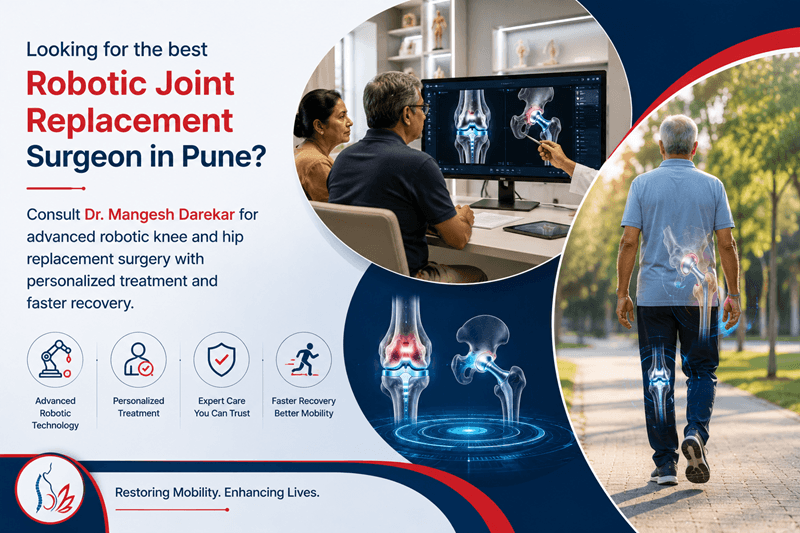
At Darekar Superspeciality Hospital and Robotic Joint Replacement Centre, patients can enquire about an orthopaedic consultation to discuss persistent knee pain, joint damage, and available treatment options.
What Is AI-Assisted Knee Replacement?
AI-assisted knee replacement refers broadly to the use of digital technologies and, where specifically implemented, artificial intelligence tools to support aspects of surgical planning, assessment, or decision-making. Depending on the technology, these tools may analyse medical images, process anatomical measurements, or assist with planning and navigation.
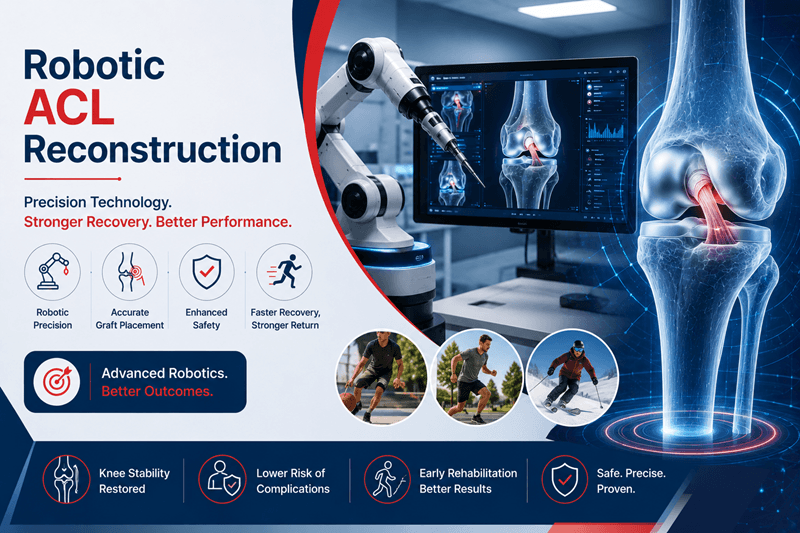
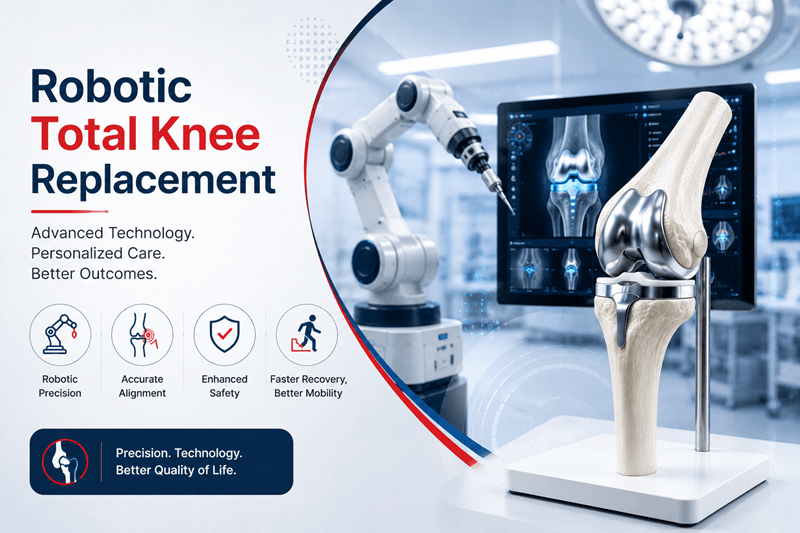
The term is not the same as robotic-assisted knee replacement. Robotic-assisted systems may use a preoperative plan, real-time measurements, navigation, or instrument guidance to help the surgeon carry out selected steps of the operation. Some systems include advanced digital analysis, but not every robotic system uses artificial intelligence.
The exact capabilities vary between technologies and hospitals. Patients should ask which system is being used and what role it plays in their procedure.
Most importantly, these tools do not independently decide whether a patient needs surgery or replace the surgeon's clinical judgement. The orthopaedic surgeon remains responsible for diagnosis, treatment recommendations, surgical decisions, and the operation itself.
How Can AI-Assisted Technology Support Knee Replacement?
Digital tools may assist different stages of knee replacement care. Their role depends on the specific software, imaging methods, and surgical system available.
1. Assessment of Knee Anatomy
Medical imaging and digital planning tools can help the surgical team review the shape of the knee, joint damage, and alignment. The surgeon combines this information with the patient's symptoms, physical examination, medical history, and functional needs.
2. Surgical Planning
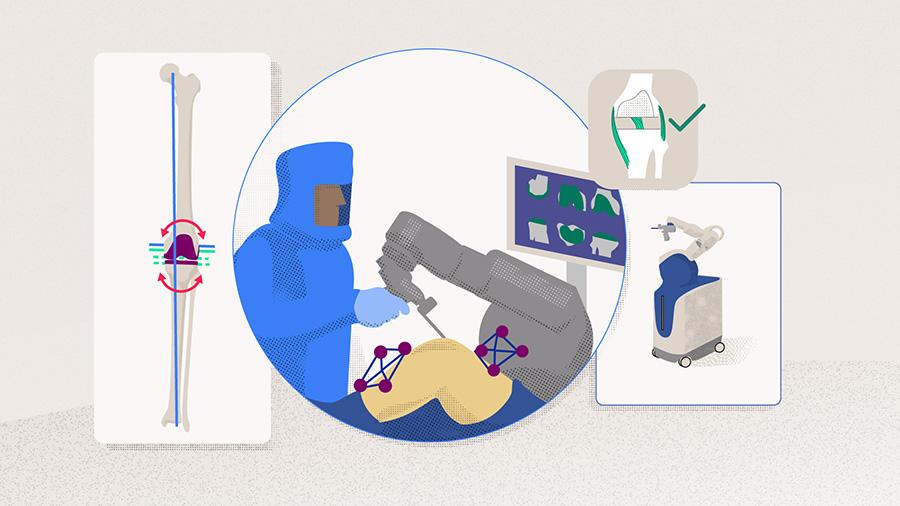
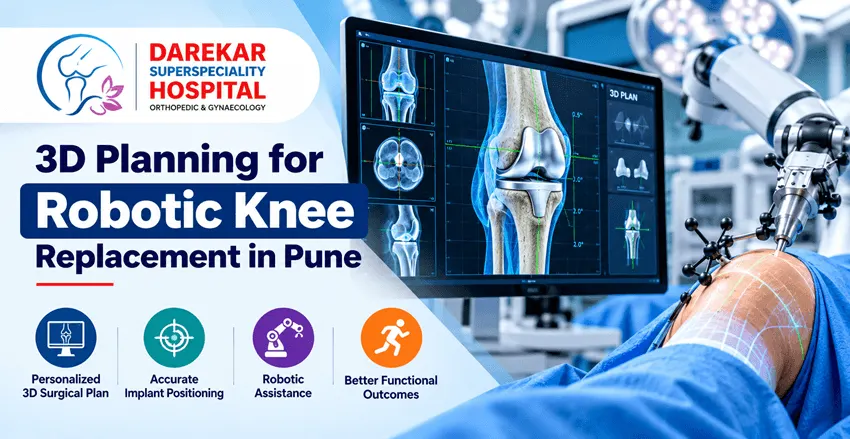
Some systems use imaging and anatomical measurements to help the surgeon plan aspects of bone preparation and implant positioning. If the platform includes three-dimensional modelling or automated analysis, it may provide additional information for the planning process.
3. Implant Position and Alignment
The position and alignment of artificial knee components are important considerations during knee replacement. Depending on the system, digital planning and navigation may provide measurements or guidance that support the surgeon's assessment during the procedure.
4. Intraoperative Guidance
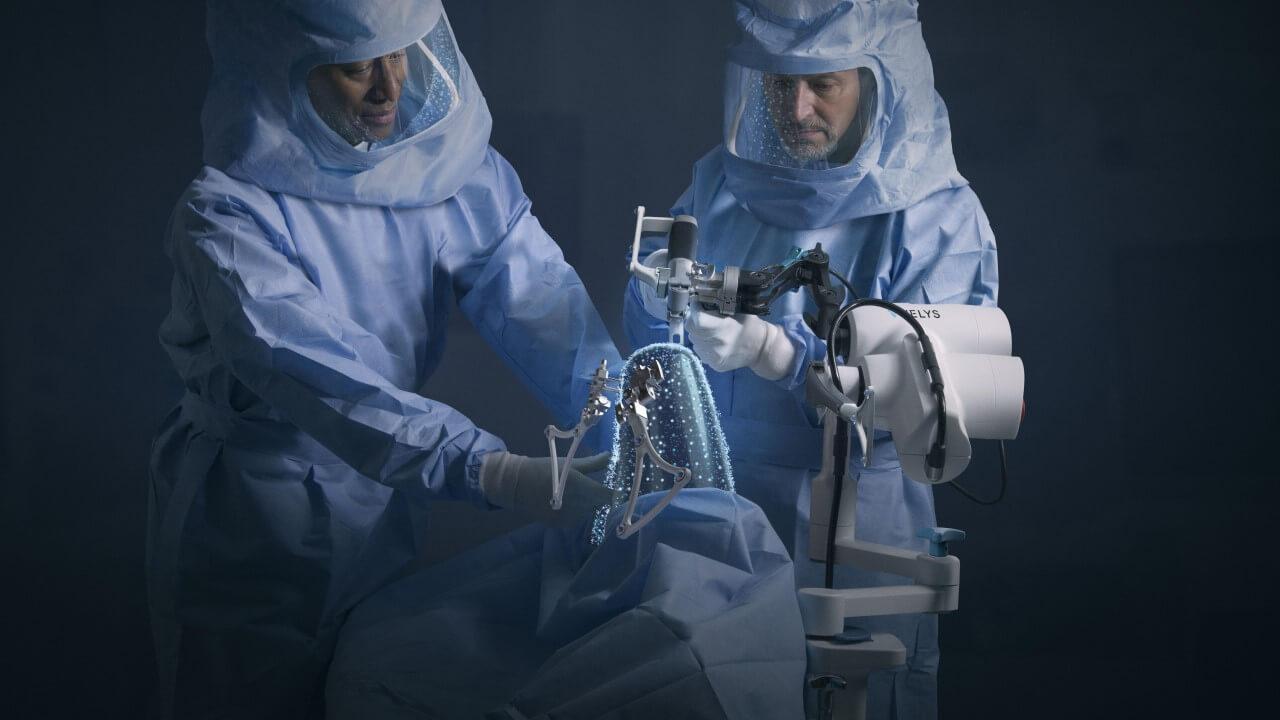
Certain robotic-assisted systems provide real-time information or controlled instrument guidance during surgery. This can help the surgeon carry out planned steps while maintaining responsibility for the operative decisions.
5. Treatment Discussion and Planning
Digital visualisations may help the clinical team explain aspects of the procedure to patients. However, treatment recommendations must be based on an individual assessment rather than software outputs alone.
Not every hospital or robotic platform offers all these functions. AI, digital planning, computer navigation, and robotic assistance are related but distinct technologies.
Who May Need Knee Replacement Surgery?
Knee replacement may be considered when substantial joint damage causes ongoing pain and limits daily activities despite appropriate non-surgical treatment. The decision depends on the diagnosis, symptoms, examination, imaging findings, general health, and the patient's goals.
Osteoarthritis
Osteoarthritis is a common cause of knee joint damage. As the protective cartilage wears down, the joint may become painful and stiff. Patients may experience discomfort while walking, climbing stairs, or standing after sitting.
Rheumatoid Arthritis
Rheumatoid arthritis is an inflammatory condition that can damage the knee joint. In advanced cases, knee replacement may be considered when joint damage and symptoms significantly affect function.
Post-Traumatic Arthritis
Previous knee injuries or fractures can contribute to joint damage and arthritis over time. Some patients may eventually need knee replacement if the resulting pain and loss of function become severe.
Advanced Joint Damage and Deformity
Significant damage or changes in knee alignment may require specialist assessment. The surgeon will determine the most appropriate treatment and whether a digital or robotic-assisted approach is suitable.
Not everyone with knee pain needs surgery. Depending on the condition, treatment may include physiotherapy, exercise, medication, activity modification, or other non-surgical measures.
AI-Assisted, Robotic-Assisted, and Conventional Knee Replacement: What Is the Difference?
These terms describe different aspects of technology used in surgical care.
AI-assisted technology: May use artificial intelligence for specific analytical or decision-support functions when such capabilities are part of the system. The exact role depends on the tool being used.
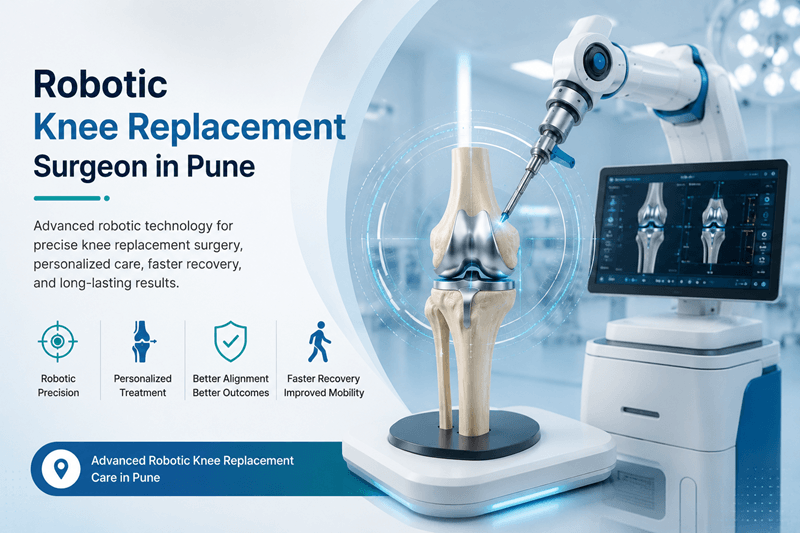
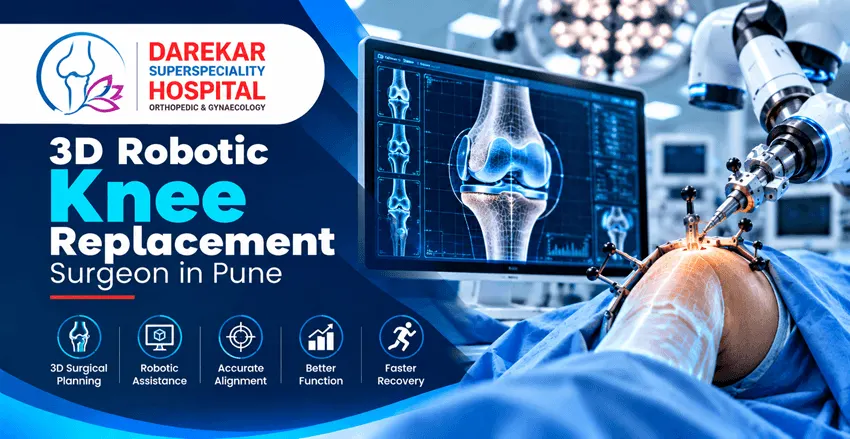
Robotic-assisted knee replacement: Uses a robotic system to provide selected forms of planning, navigation, measurement, or instrument guidance. The surgeon remains in control of the procedure.
Conventional knee replacement: Uses established surgical instruments, alignment guides, imaging, and the surgeon's clinical assessment without a robotic system guiding the operative steps.
| Aspect | Conventional surgery | Digital or robotic-assisted surgery |
|---|---|---|
| Planning | Based on clinical assessment, imaging, and established methods | May add digital modelling, navigation, or system-specific measurements |
| Instrument guidance | Conventional surgical instruments and guides | May include robotic guidance or navigation |
| Imaging requirements | Determined by the clinical procedure | Depend on the particular technology |
| Surgical decisions | Made by the surgeon | Still made by the surgeon, using any additional system information |
| Expected results | Depend on individual and surgical factors | Also depend on individual and surgical factors; technology does not guarantee better outcomes |
Robotic-assisted systems can improve the precision of implant alignment in some settings. However, greater technical precision does not automatically translate into better pain relief, faster recovery, or improved long-term outcomes for every patient.
Patients should ask the surgeon to explain the actual capabilities of the proposed technology rather than assuming that every system uses AI or offers the same benefits.
Potential Benefits of AI-Assisted or Robotic-Assisted Knee Replacement
When appropriate technology is available and suitable for the patient, digital and robotic-assisted tools may offer potential advantages during surgical planning and execution.
Individualised Planning
Digital information may help the surgeon evaluate a patient's anatomy and plan selected aspects of the procedure according to individual clinical requirements.
Additional Measurements and Guidance
Certain systems provide measurements or feedback that can assist the surgeon in evaluating alignment and implant positioning.
Structured Surgical Preparation
Digital planning can help the surgical team prepare for key steps of the procedure and review relevant anatomical information before or during surgery.
Visual Explanation of the Procedure
Where suitable visualisation tools are available, digital models may help explain aspects of the planned surgery and support discussion between the surgeon and patient.
Support for Surgical Decision-Making
Technology can provide additional information, but it does not replace the surgeon's experience, examination findings, or clinical judgement.
These are potential benefits, not guaranteed outcomes. The value of a particular system depends on its capabilities, the surgeon's training, the patient's condition, and the evidence supporting its use.
Are There Any Risks or Limitations?
Knee replacement remains a major surgical procedure, whether it is performed conventionally or with robotic assistance. Potential complications include infection, blood clots, bleeding, stiffness, persistent pain, nerve or blood vessel injury, implant-related problems, and the possibility of further surgery.
Technology-related considerations may include:
Some robotic systems require additional imaging, such as a preoperative CT scan.
Additional equipment, imaging, or technology may affect the total cost of treatment.
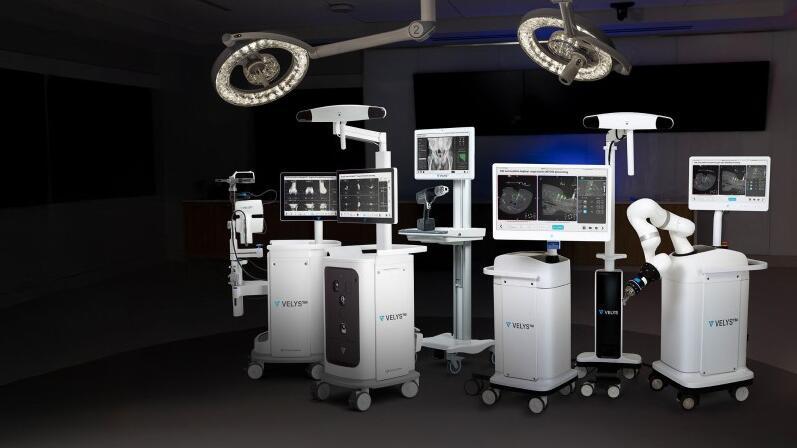
Systems differ in their capabilities, planning methods, and compatibility with implants.
The surgical team requires appropriate training and familiarity with the chosen system.
Digital tools may provide information or guidance, but they cannot eliminate surgical risks.
AI-assisted functions, where present, have specific capabilities and limitations and should not be treated as a substitute for clinical judgement.
Before proceeding, ask your surgeon to explain the relevant risks, benefits, alternatives, and expected costs for your particular case.
What Happens During Knee Replacement Surgery?
The exact steps depend on whether the procedure is a partial or total knee replacement and on the surgical technique used.
Before Surgery
The surgical team reviews the patient's medical history, physical examination, imaging, medications, and general health. The surgeon explains the proposed procedure, implant options, anaesthesia, potential complications, and recovery plan.
During Surgery
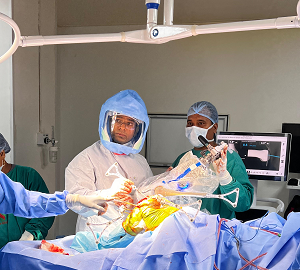
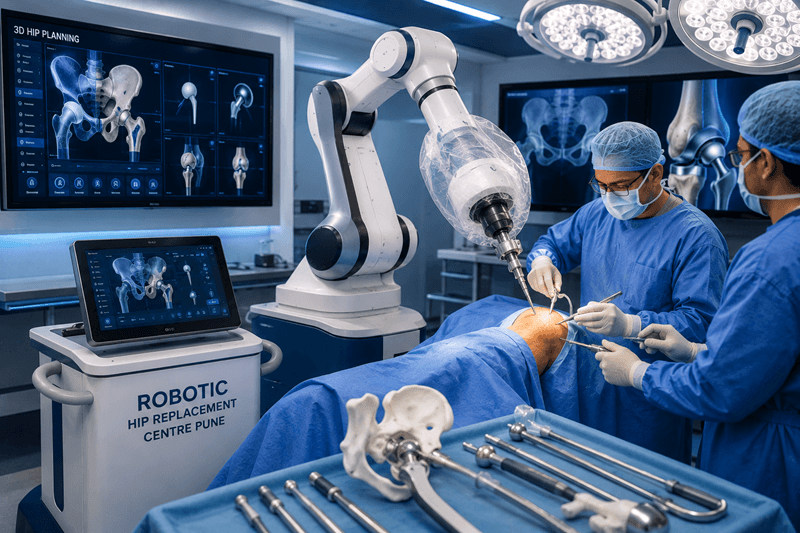
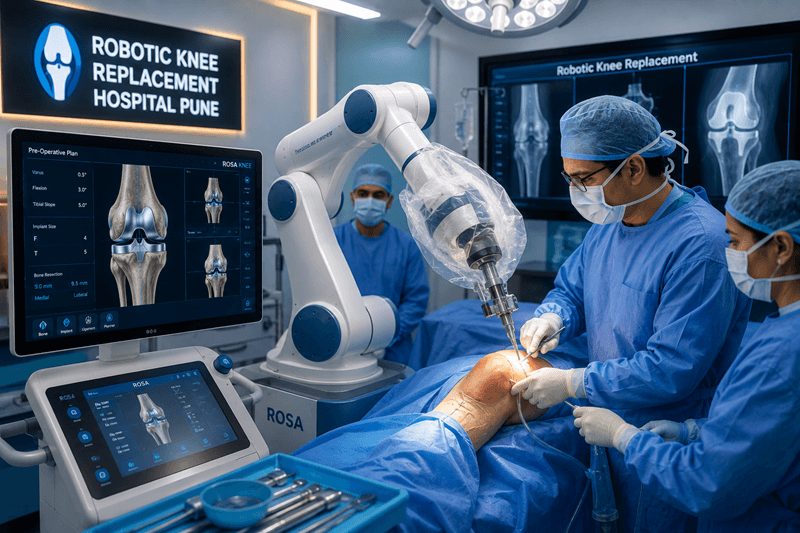
The surgeon removes damaged joint surfaces as required and positions the artificial components. In robotic-assisted procedures, the system may provide planning information, measurements, navigation, or instrument guidance for selected steps. The surgeon remains responsible for carrying out the operation.
After Surgery
The care team monitors the patient, manages pain, provides wound-care instructions, and helps begin movement when medically appropriate. The timing of mobilisation depends on the patient's condition and the treating team's guidance.
Recovery After AI-Assisted or Robotic-Assisted Knee Replacement
Recovery varies from patient to patient. Using digital or robotic-assisted technology does not remove the need for postoperative care and rehabilitation.
Early Movement
When medically appropriate, the patient may begin sitting, standing, and walking with assistance. The care team determines the timing according to the patient's condition and surgical plan.
Pain Management and Wound Care
Patients receive instructions for prescribed medicines, wound care, and activity. Following these instructions can help support recovery and identify concerns early.
Physiotherapy and Exercise
Physiotherapy helps work on knee movement, strength, balance, and walking. The exercise plan should be followed according to the treating team's instructions and adjusted as recovery progresses.
Gradual Return to Activities
Daily activities are resumed progressively. The pace depends on general health, preoperative mobility, the procedure performed, pain, and rehabilitation progress.
Follow-Up Care
Follow-up visits help the surgeon assess wound healing, movement, pain, and functional progress. Patients should attend scheduled appointments and report any new or worsening symptoms.
There is no single recovery timeline that applies to everyone. Your surgeon and physiotherapist can provide guidance based on your individual progress.
How to Choose an AI-Assisted Knee Replacement Surgeon in Pune
When comparing knee replacement options, focus on the complete treatment plan rather than the technology name alone.
Consider discussing the following questions during your consultation:
Is knee replacement appropriate for my diagnosis and symptoms?
Are non-surgical treatments still reasonable in my case?
Which digital, AI-assisted, navigation, or robotic system is proposed?
What does the system actually do during planning or surgery?
Does the procedure require a CT scan or other additional investigations?
What are the potential benefits and limitations for my particular condition?
What experience and training does the surgical team have with the proposed procedure?
What are the total costs, including investigations, hospital care, implants, and rehabilitation?
What complications should I understand before making a decision?
What postoperative physiotherapy and follow-up care will be needed?
A detailed consultation helps you understand the options, compare their advantages and limitations, and make a decision based on your clinical needs.
Why Consult Dr. Mangesh Darekar for Knee Replacement in Pune?
Patients experiencing persistent knee pain can consult Dr. Mangesh Darekar at Darekar Superspeciality Hospital and Robotic Joint Replacement Centre to discuss their symptoms and available treatment options.
An orthopaedic consultation can help assess joint damage, review relevant investigations, consider non-surgical and surgical treatments, and determine whether conventional or robotic-assisted knee replacement may be appropriate.
Patients should ask about the proposed surgical approach, available technology, potential risks, expected costs, and rehabilitation requirements before making a decision. The recommended treatment should be based on an individual clinical assessment.
Hospital: Darekar Superspeciality Hospital and Robotic Joint Replacement Centre
Address: 2nd Floor, Shivpushpa Landmark, Sinhagad Road, Sun City Road, above Bharti Bazaar, Pune, Maharashtra 411041
Phone: +91 97669 55988
Website: https://www.roboticjointreplacementpune.com/
Conclusion
AI-assisted tools, digital planning, and robotic-assisted technologies are developing areas of orthopaedic care. Depending on the system, they may help surgeons review anatomical information, plan selected steps of knee replacement, and use additional measurements or guidance during surgery.
However, the term AI-assisted does not mean every robotic system uses artificial intelligence, and no technology guarantees a particular surgical result. An appropriate diagnosis, careful patient selection, surgical expertise, realistic expectations, and a structured rehabilitation plan remain essential.
If knee pain is affecting your mobility and daily activities, arrange an orthopaedic consultation to discuss your treatment options. Ask about the technology being proposed, its role in your procedure, the potential benefits and risks, and the expected costs before deciding on surgery.
Medical information notice: This article is for general educational purposes and does not replace an individual consultation with a qualified orthopaedic professional.








.png)
.jpg)